


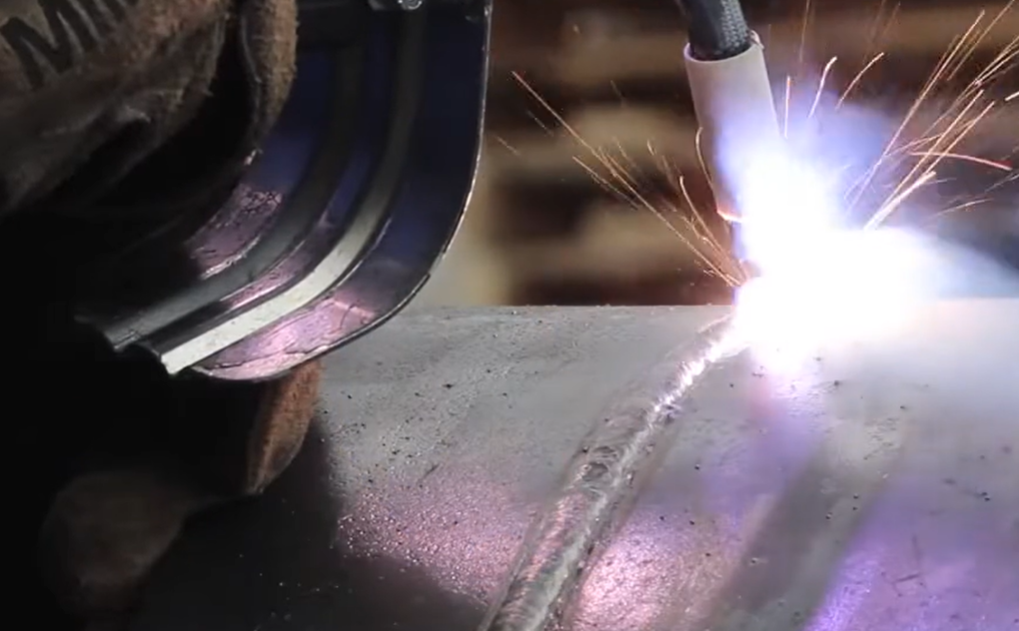
Advancements in Hobart Self-Shielded Wires Benefit Transmission Pipeline Applications
Originally published on | Updated on
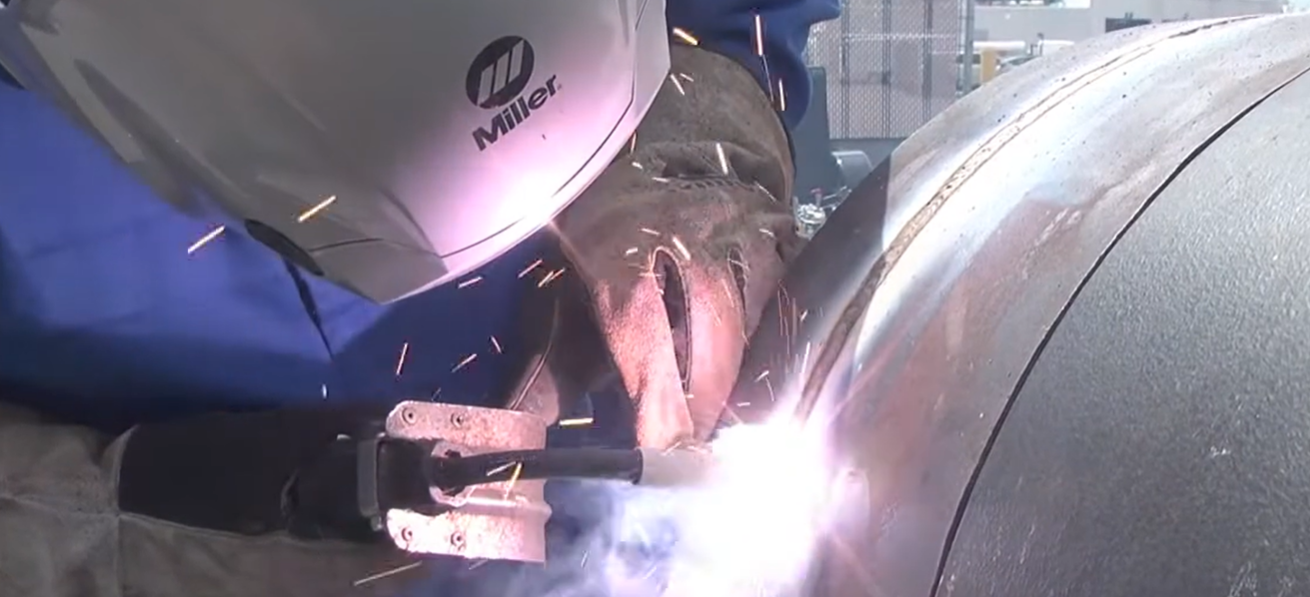
New advancements in the formulation and manufacturing of self-shielded wires are benefiting transmission pipeline applications. In this video, Matt Steel, welding engineer at Miller Electric Mfg. Co. explains the techniques for using Hobart self-shielded wire and explains the benefits, including, but not limited to: easier out-of-position welding; easy slag removal for quicker clean-up times; good sidewall fusion and flat bead appearance for x-ray quality welds; and higher impact properties to meet the demands of pipeline jobs today.
Video Transcript
I’m Matt Steel, a welding engineer here at Miller Electric. Over the past decade, self-shielded wires have become pretty popular in the construction industry, but new advancements in the formulation and manufacturing process have made it beneficial for transmission pipeline applications. Let’s take a look at what the welding technique actually looks like for the new formulations of the self-shielded wire. We’re using the Big Blue 350 Pipe Pro along with the Extreme 8 HD feeder, using the Hobart 71 T8 wire.
One of the things that you’ll notice is very important when you’re welding self-shielded wire: you need a 3/4 inch to 1 inch stick out. The reason for that is because it preheats the wire, removing the moisture while you’re welding. One of the things that you’ll notice with the puddle is it’s a very fast-freezing puddle, allowing you to weld in the overhead position. You’re not going to want to weave any wider than a half-inch. Once your bead gets any wider than a half-inch, you’re going to want to start doing stringer passes. The puddle gets too wide for the shielding gas to cover the whole puddle while you’re welding. The slag removal is much easier, allowing for quicker cleanup times.
One of the things with the self-shielded wire is the ease of use for the actual welding applications, and it’s easy for someone to pick up from welding stick to going to self-shielded wire. Because it’s a continuously fed wire, you’re not going to have the constant stops and starts that you would with stick welding, and you’re going to be able to make those welds at a quicker time.
With these new formulations, what you’ll notice is the bead appearance is very good. One of the things that you’ll see is that you’ll get good sidewall fusion and you’ll be able to get that nice flat bead appearance that you’re really looking for for those X-ray quality welds.
Self-shielded wires are commonly used on pipeline applications to eliminate the need for the bottles that are used on other wire applications. Some of the other benefits that you’ll see with the self-shielded wire is better weldability that you’re going to see with these new formulations. It allows you to weld these out-of-position welds much easier. Another benefit is the mechanical properties that you’re going to see with these new formulations. You’re going to get the higher impacts that you’re going to need to meet the demands of the pipelines today. Another benefit is the low hydrogen process. The low hydrogen process minimizes the risk for hydrogen assisted cracking.